
Menu
TLG Managing Partner Jeff Tenenbaum Quoted in Washington Post Article, “Diversity scholarships decline after legal complaints, Trump’s crackdown”
July 7, 2026
TLG Managing Partner Jeff Tenenbaum was quoted in a Washington Post article titled, “Diversity scholarships decline after legal complaints, Trump’s crackdown.”
“Still, attorneys say the laws around scholarship criteria are complex, because different rules apply to different types of institutions. For instance, colleges and other educational organizations that receive federal funds are subject to the Title IX civil rights statute banning sex discrimination, but most private foundations are not.
Many of the lawsuits against nonprofits and companies are based on a separate statute (Section 1981 of the Civil Rights Act of 1866) that bars racial discrimination in making and enforcing contracts.
“It is a bit complicated from a legal perspective,” said Jeffrey Tenenbaum, an attorney in Washington, who has worked with tax-exempt organizations for decades and counseled nonprofits about the federal laws covering scholarships.
While the contracting law only bars discrimination based on race and ethnicity, Tenenbaum said it’s also become harder for nonprofits to offer scholarships exclusively for women or men because many colleges and universities won’t accept money where eligibility is restricted by sex due to Title IX.
But changing the scholarship criteria can also create new problems, because nonprofits are obligated to honor any restrictions donors put on the gifts.
In June, the Iowa Supreme Court blocked the University of Iowa from redirecting a private donation meant to help Black students pursuing the physical sciences to one benefiting first-generation students. The court said there wasn’t enough evidence that the new criteria reflected the donor’s wishes and ruled there must be further court proceedings to determine how the funds could be used to abide by both the law and the donor’s intent.
“It’s a tricky line that folks are trying to navigate right now,” said Bright, of the National Scholarship Providers Association.
Bright said changing the criteria can often take a year or more.
In addition, organizations have to be careful not to change the criteria to something that is clearly a “proxy” for race or ethnicity, Tenenbaum said. That could include restricting the scholarships to students attending historically Black colleges, where most of the students are Black.”







Meet Our Team

Jeff is one of the nation’s leading nonprofit attorneys, and a highly regarded and frequent author, lecturer, media commentator, and expert witness on nonprofit legal matters. Formerly the longtime chair of one of the country’s largest nonprofit law practices, he is the recipient of numerous distinguished national awards and honors.
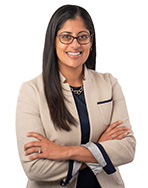
Nisha is an experienced in-house nonprofit attorney and senior-level business partner. Formerly the associate general counsel of a large REALTOR® association in Northern Virginia, she has a broad understanding of nonprofit legal matters as well as business operations, governance, and development.
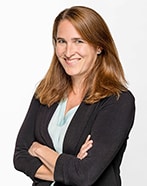
Holly Peterson is an attorney with significant experience in the association and nonprofit, employment, and education sectors. She excels at translating complex regulatory and legal issues into practical and digestible client solutions. Prior to joining TLG, Holly served in a senior role on the Legal Resources Team and Leadership Team at the National Association of College and University Attorneys for eight years, where she was immersed in legal and operational issues impacting the nonprofit education sector, acquiring significant experience with association and nonprofit operations and management.

Counsel Ashley Wisneski has been practicing law for 20 years and brings extensive in-house experience to TLG. Most recently, she served as the University Counsel at the Massachusetts College of Pharmacy and Health Sciences and the Associate General Counsel at Johnson & Wales University.
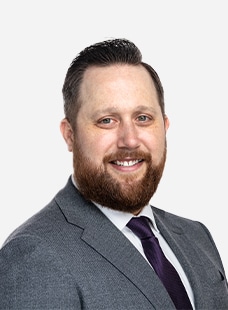
Kevin Serafino is an attorney with experience advising a wide range of nonprofit organizations at various stages of their development, leveraging his decade of experience working in-house at two national trade associations to provide practical and actionable legal advice to mission-driven organizations. He also counsels politically active organizations on federal and state lobbying, ethics, and campaign finance laws. Kevin was the recipient of the American Bar Association’s 2026 Outstanding Nonprofit Lawyer Award in the Young Attorney category. Prior to joining TLG, Kevin served as an associate in the nonprofit organizations practice of a leading mid-Atlantic law firm, while also practicing in the firm’s Chambers-ranked political law group.
Greg Whitten is an attorney with significant experience advising nonprofit, tax-exempt organizations and public entities on a wide range of legal issues related to strategy, compliance, and operations. Drawing on more than four years of experience as Senior Legal Counsel at an international technology nonprofit organization, he provides practical legal guidance to mission-driven organizations navigating complex regulatory and operational environments.

Kyler Mejia is an attorney with experience advising nonprofit tax-exempt organizations and socially responsible businesses operating both domestically and internationally. Kyler counsels a broad range of nonprofits on a wide array of legal matters. He also acts as outside general counsel to many clients, assisting with issues related to federal tax exemption, corporate governance, contract reviews and drafting, mergers and acquisitions, subsidiaries and affiliates, hybrid corporate structures, partnerships and joint ventures, lobbying and political activity compliance, intellectual property, and more. Prior to joining TLG, Kyler worked at a boutique law firm in Tempe, AZ, focused exclusively on servicing the legal needs of nonprofits.
Rowan Cunningham is an attorney with experience advising nonprofit tax-exempt organizations on a broad range of legal and compliance matters. Prior to joining TLG, Rowan worked for several years as a law clerk and then an attorney at another DC-based law firm focused on nonprofit organizations.