
Menu
TLG Managing Partner Jeff Tenenbaum Quoted in Chronicle of Philanthropy Article, “Why Removing a Problematic Donor’s Name Is Harder Than It Looks”
June 8, 2026
TLG Managing Partner Jeff Tenenbaum was quoted in the Chronicle of Philanthropy article, “Why Removing a Problematic Donor’s Name Is Harder Than It Looks.”
Some experts say the drawn-out process on college campuses isn’t surprising — especially since the donors under scrutiny for affiliating with Epstein haven’t been charged with crimes.
“If we were talking about Jeffrey Epstein as a donor, it would be one thing,” says Jeffrey Tenenbaum, a lawyer who counsels nonprofits. “But we’re talking about people who have been alleged to have been associated with him but have not been found guilty of criminal conspiracy to facilitate crimes. It makes these situations much more difficult to navigate.”
The risk of removing a name, Tenenbaum says, is not only a potential lawsuit from an aggrieved donor — and the possible reclaiming of the donation — but also the message that the removal sends to future donors.
“Donors have certain contractual rights, and institutions have to be very cognizant of those rights, and they have to act accordingly,” Tenenbaum says. “Otherwise, they put themselves not only at legal risk, but they also put themselves at risk of alienating future donors who might say, ‘Well, I’m not going to give to this institution because they have a history of taking people’s names down from buildings.’”
Donations that provide naming rights include language related to morals that are “some of the most heavily negotiated provisions” in gifts agreements, Tenenbaum says. Most include language similar to Haverford’s broad gift acceptance policy, which states that names can be removed from campus spaces if “circumstances change substantially so that the continued use of the name may be deemed detrimental to the College.”







Meet Our Team

Jeff is one of the nation’s leading nonprofit attorneys, and a highly regarded and frequent author, lecturer, media commentator, and expert witness on nonprofit legal matters. Formerly the longtime chair of one of the country’s largest nonprofit law practices, he is the recipient of numerous distinguished national awards and honors.

Nisha is an experienced in-house nonprofit attorney and senior-level business partner. Formerly the associate general counsel of a large REALTOR® association in Northern Virginia, she has a broad understanding of nonprofit legal matters as well as business operations, governance, and development.

Holly Peterson is an attorney with significant experience in the association and nonprofit, employment, and education sectors. She excels at translating complex regulatory and legal issues into practical and digestible client solutions. Prior to joining TLG, Holly served in a senior role on the Legal Resources Team and Leadership Team at the National Association of College and University Attorneys for eight years, where she was immersed in legal and operational issues impacting the nonprofit education sector, acquiring significant experience with association and nonprofit operations and management.

Counsel Ashley Wisneski has been practicing law for 20 years and brings extensive in-house experience to TLG. Most recently, she served as the University Counsel at the Massachusetts College of Pharmacy and Health Sciences and the Associate General Counsel at Johnson & Wales University.
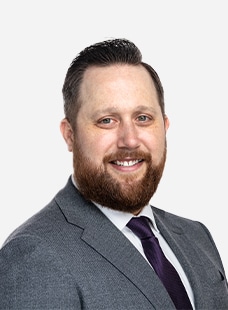
Kevin Serafino is an attorney with experience advising a wide range of nonprofit organizations at various stages of their development, leveraging his decade of experience working in-house at two national trade associations to provide practical and actionable legal advice to mission-driven organizations. He also counsels politically active organizations on federal and state lobbying, ethics, and campaign finance laws. Kevin was the recipient of the American Bar Association’s 2026 Outstanding Nonprofit Lawyer Award in the Young Attorney category. Prior to joining TLG, Kevin served as an associate in the nonprofit organizations practice of a leading mid-Atlantic law firm, while also practicing in the firm’s Chambers-ranked political law group.
Greg Whitten is an attorney with significant experience advising nonprofit, tax-exempt organizations and public entities on a wide range of legal issues related to strategy, compliance, and operations. Drawing on more than four years of experience as Senior Legal Counsel at an international technology nonprofit organization, he provides practical legal guidance to mission-driven organizations navigating complex regulatory and operational environments.

Kyler Mejia is an attorney with experience advising nonprofit tax-exempt organizations and socially responsible businesses operating both domestically and internationally. Kyler counsels a broad range of nonprofits on a wide array of legal matters. He also acts as outside general counsel to many clients, assisting with issues related to federal tax exemption, corporate governance, contract reviews and drafting, mergers and acquisitions, subsidiaries and affiliates, hybrid corporate structures, partnerships and joint ventures, lobbying and political activity compliance, intellectual property, and more. Prior to joining TLG, Kyler worked at a boutique law firm in Tempe, AZ, focused exclusively on servicing the legal needs of nonprofits.

Rowan Cunningham is an attorney with experience advising nonprofit tax-exempt organizations on a broad range of legal and compliance matters. Prior to joining TLG, Rowan worked for several years as a law clerk and then an attorney at another DC-based law firm focused on nonprofit organizations.