
Menu
TLG Managing Partner Jeff Tenenbaum Quoted Extensively in NonProfit Times Article, “Threats and Bluster: The IRS’s Black Cloud Over the Nonprofit Sector”
February 12, 2026
TLG Managing Partner Jeff Tenenbaum was quoted extensively in an article in The NonProfit Times entitled, “Threats and Bluster: The IRS’s Black Cloud Over the Nonprofit Sector.”
“The shifting of enforcement duties from the IRS to the Department of Justice is important. “I know exactly what’s involved in litigation, and I know exactly what’s involved in an IRS audit and appeal. The two share virtually no similarity,” said Jeffrey S. Tenenbaum, managing partner at Tenenbaum Law Group, a Washington, D.C.-based firm that primarily serves as outside general counsel for nonprofit organizations and related entities.
“In terms of the IRS, there has been a lot of saber-rattling from the President himself and others in the administration about nonprofit organizations and tax-exempt organizations,” Tenenbaum said. “But from what we can gather there has been no meaningful, if any, kind of IRS crackdown or threats to the tax-exempt status of most tax-exempt organizations.”
Tenenbaum noted there are only three ways tax-exempt status can be disrupted. First, it is automatically revoked if an organization fails to file a federal Form 990 three years in a row. The second reason is through an audit, which has due process protections and appeals processes built into it. But this process is not an effective tactic for an administration that seemingly relies on shows of force. Third, an organization’s status can be suspended if it is deemed as supporting or engaging in terrorism.
“During the pendency of [an audit], which can take months, if not years, all of it remains private,” Tenenbaum said. The IRS, by law, is not allowed to publicly disclose any of that the process publicly. “Of course, the organization always has the right to make it public if they wanted to. Most organization organizations don’t. It can take years, and most audits, frankly, end up with some resolution short of revocation, and so it’s not really a very politically favorable alternative for the administration,” said Tenenbaum.
Even if the administration does use this tactic, the impact on a nonprofit would be inconvenience, but probably not devastating. An IRS audit is probably not going to drain the resources of an organization. Tenenbaum said, “It’s not like you can just issue tons of subpoenas and depose all these people and file all these different motions.”
Audits, Tenenbaum added, offer “plenty of time” to comply. An organization might have to retain an attorney or a certified public accountant (CPA) to help defend it, but it’s nothing like litigation, Tenenbaum said.
“I don’t see the IRS audit process as a tool for trying to wear down and beat down and drain the resources of nonprofit organizations,” Tenenbaum continued. “Plus, these are very manpower intensive [on the part of the IRS], and the IRS wasn’t doing many audits to begin with, even before this administration took office. Since then, the administration has cut the number of IRS auditors significantly, so there are very few auditors left to even engage in this.”
The supporting or engaging in terrorist activities means might be the most insidious. Under Internal Revenue Code Section 501(p), an organization’s tax-exempt status can be immediately suspended if the organization is designated or identified a supporting or engaging in terrorist activity or supporting terrorism. But the law was designed to address support of foreign terrorism. “It’s hard for me to see how Section 501(p) could be utilized, at least in a lawful manner, to suspend the tax-exempt status of an organization that is not supporting foreign terrorists,” he said.
Neither Trump’s nor Bondi’s memorandums mention Section 501(p) in their discussions of combatting domestic terrorism.”







Meet Our Team

Jeff is one of the nation’s leading nonprofit attorneys, and a highly regarded and frequent author, lecturer, media commentator, and expert witness on nonprofit legal matters. Formerly the longtime chair of one of the country’s largest nonprofit law practices, he is the recipient of numerous distinguished national awards and honors.

Nisha is an experienced in-house nonprofit attorney and senior-level business partner. Formerly the associate general counsel of a large REALTOR® association in Northern Virginia, she has a broad understanding of nonprofit legal matters as well as business operations, governance, and development.

Holly Peterson is an attorney with significant experience in the association and nonprofit, employment, and education sectors. She excels at translating complex regulatory and legal issues into practical and digestible client solutions. Prior to joining TLG, Holly served in a senior role on the Legal Resources Team and Leadership Team at the National Association of College and University Attorneys for eight years, where she was immersed in legal and operational issues impacting the nonprofit education sector, acquiring significant experience with association and nonprofit operations and management.

Counsel Ashley Wisneski has been practicing law for 20 years and brings extensive in-house experience to TLG. Most recently, she served as the University Counsel at the Massachusetts College of Pharmacy and Health Sciences and the Associate General Counsel at Johnson & Wales University.
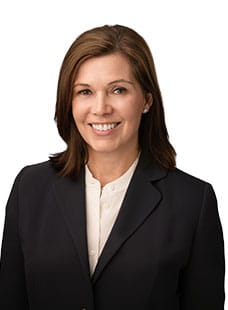
Laura Farhang is a senior attorney with extensive in-house and private-practice experience advising nonprofit organizations, trade and professional associations, multinational companies, executive leadership teams, and boards of directors. Before joining TLG, she served as General Counsel and a member of the Senior Leadership Team of the Center for International Private Enterprise, a global nonprofit and Core Institute of the National Endowment for Democracy.

Kevin Serafino is an attorney with experience advising a wide range of nonprofit organizations at various stages of their development, leveraging his decade of experience working in-house at two national trade associations to provide practical and actionable legal advice to mission-driven organizations. He also counsels politically active organizations on federal and state lobbying, ethics, and campaign finance laws. Kevin was the recipient of the American Bar Association’s 2026 Outstanding Nonprofit Lawyer Award in the Young Attorney category. Prior to joining TLG, Kevin served as an associate in the nonprofit organizations practice of a leading mid-Atlantic law firm, while also practicing in the firm’s Chambers-ranked political law group.

Greg Whitten is an attorney with significant experience advising nonprofit, tax-exempt organizations and public entities on a wide range of legal issues related to strategy, compliance, and operations. Drawing on more than four years of experience as Senior Legal Counsel at an international technology nonprofit organization, he provides practical legal guidance to mission-driven organizations navigating complex regulatory and operational environments.

Kyler Mejia is an attorney with experience advising nonprofit tax-exempt organizations and socially responsible businesses operating both domestically and internationally. Kyler counsels a broad range of nonprofits on a wide array of legal matters. He also acts as outside general counsel to many clients, assisting with issues related to federal tax exemption, corporate governance, contract reviews and drafting, mergers and acquisitions, subsidiaries and affiliates, hybrid corporate structures, partnerships and joint ventures, lobbying and political activity compliance, intellectual property, and more. Prior to joining TLG, Kyler worked at a boutique law firm in Tempe, AZ, focused exclusively on servicing the legal needs of nonprofits.

Rowan Cunningham is an attorney with experience advising nonprofit tax-exempt organizations on a broad range of legal and compliance matters. Prior to joining TLG, Rowan worked for several years as a law clerk and then an attorney at another DC-based law firm focused on nonprofit organizations.